
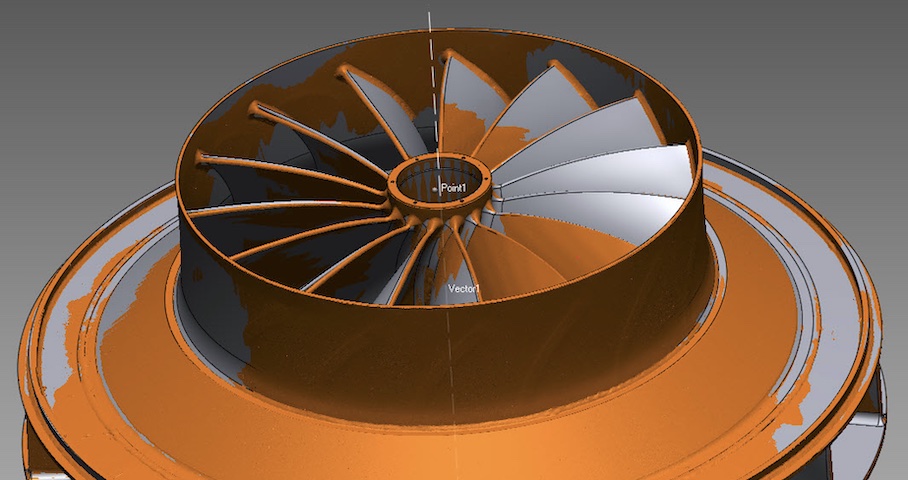
Hydropower modernization projects often begin long before a repair is made. They begin with understanding the actual condition of critical assets.
As hydroelectric facilities continue operating equipment that may be decades beyond its original design life, accurate dimensional data has become essential for planning repairs, reverse engineering legacy components, validating replacement parts, and reducing outage risk.
In this article, our experts explore how 3D scanning, digital engineering, and advanced field machining are working together to help hydro operators make more informed decisions throughout the modernization process.
Improving Repair Accuracy, Reducing Outage Risk, and Extending the Life of Aging Hydroelectric Assets
This article is based on insights shared by our experts Michael Trudeau and Ryan Buck during their presentation, “Revolutionizing Hydropower: 3D Scanning & Advanced In-Situ Machining,” at the Power of Water Conference in Ontario. The session highlighted how hydroelectric facility operators are leveraging advanced 3D scanning, dimensional measurement, and field machining technologies to support maintenance, rehabilitation, and modernization projects while reducing risk and improving project execution.
Hydropower remains one of North America’s most valuable sources of renewable energy, providing reliable baseload generation, grid stability, and energy storage capabilities. Yet much of the infrastructure supporting that generation was built decades ago.
Across the United States and Canada, hydroelectric facilities that were commissioned in the 1940s through the 1970s continue to serve as critical components of the electrical grid. While dams themselves may have service lives measured in centuries, the turbines, generators, shafts, bearings, wicket gates, and rotating equipment that convert water into power face a different reality. Many of these assets are operating well beyond their original design life and are increasingly challenged by wear, distortion, cavitation, erosion, and decades of operational loading.
For owners and operators, the challenge is no longer simply maintaining equipment – it is modernizing aging assets while balancing reliability, generation demands, budget constraints, and increasingly compressed outage schedules.
The question facing the industry is straightforward: How do you make confident repair decisions when the actual condition of critical equipment may differ significantly from the original drawings?
The answer increasingly lies in the integration of innovative 3D laser scanning, digital engineering, and advanced, high-acuity field machining.
The Modernization Challenge Facing North American Hydropower
Much of North America’s hydroelectric infrastructure was built before digital design tools, modern condition monitoring systems, and advanced manufacturing technologies existed. While these facilities continue to perform remarkably well, decades of service inevitably change the geometry and condition of critical components.
Turbine runners experience cavitation and erosion. Generator frames distort from thermal cycling and operational stresses. Shafts develop wear patterns that differ from original manufacturing conditions. Bearing surfaces degrade. Structural components move incrementally over time.
Yet many refurbishment projects still begin with drawings that may be decades old.
The reality is that equipment rarely exists today exactly as it was originally designed.
Understanding the difference between design intent and actual field conditions has become one of the most important factors in successful modernization projects.
Why Traditional Repair Planning Is No Longer Enough
Historically, many hydroelectric repairs followed a straightforward process. Equipment was disassembled, measurements were taken, engineering assessments were completed, and repair plans were adjusted based on discoveries made during the outage.
While this approach was often acceptable when schedules were more flexible, today’s operating environment leaves far less room for uncertainty. Generation demands continue to increase. Skilled labor resources are increasingly constrained. Material lead times are longer than ever. Outage windows are scrutinized closely because every additional day out of service represents lost generation revenue and increased operational risk.
As a result, discovering dimensional problems after disassembly has become one of the most costly and disruptive events a project can encounter.
This is where dimensional intelligence changes the equation. By accurately capturing existing conditions before or immediately following disassembly, owners and operators can make informed decisions based on data rather than assumptions.
The Evolving Role of Field Machining in Hydropower
Hydroelectric facilities routinely depend on field machining to restore critical equipment without removing major components from service locations.
Common in-situ machining applications include turbine runner repairs, seal ring machining, bearing journal refurbishment, shaft and coupling restoration, stator frame boring, stay ring machining, guide bearing repairs, and weld overlay restoration.
For many hydroelectric operators, field machining provides substantial operational advantages compared to offsite repair methods, including reduced outage duration, lower logistics complexity, preservation of installed geometry, and faster return to service.
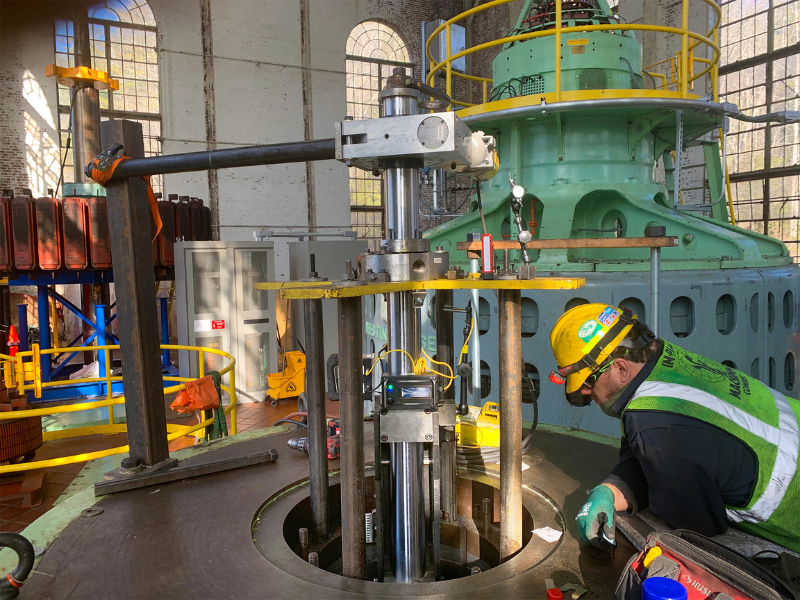
Hydro Turbine Shaft Repair On-Site Without Shaft Rotation (Utilizing Custom Tooling Rings)
The Rise of 3D Laser Scanning and Digital Measurement
Modern laser scanning systems can capture millions of measurement points in a matter of minutes, producing highly accurate digital representations of equipment and structures.
Unlike traditional measurement methods that collect isolated dimensions, 3D scanning captures complete geometry.
The resulting point cloud provides engineers and maintenance teams with a comprehensive understanding of actual equipment condition, including wear patterns, distortion, alignment issues, and geometric deviations that may otherwise go unnoticed.
In hydroelectric applications, 3D scanning supports:
- As-found condition documentation
- Wear mapping
- Alignment verification
- Reverse engineering
- Virtual fit-up simulations
- Interference detection
- Digital twin development
- Final inspection validation
Most importantly, scanning allows project teams to understand existing conditions before critical repair decisions are made.
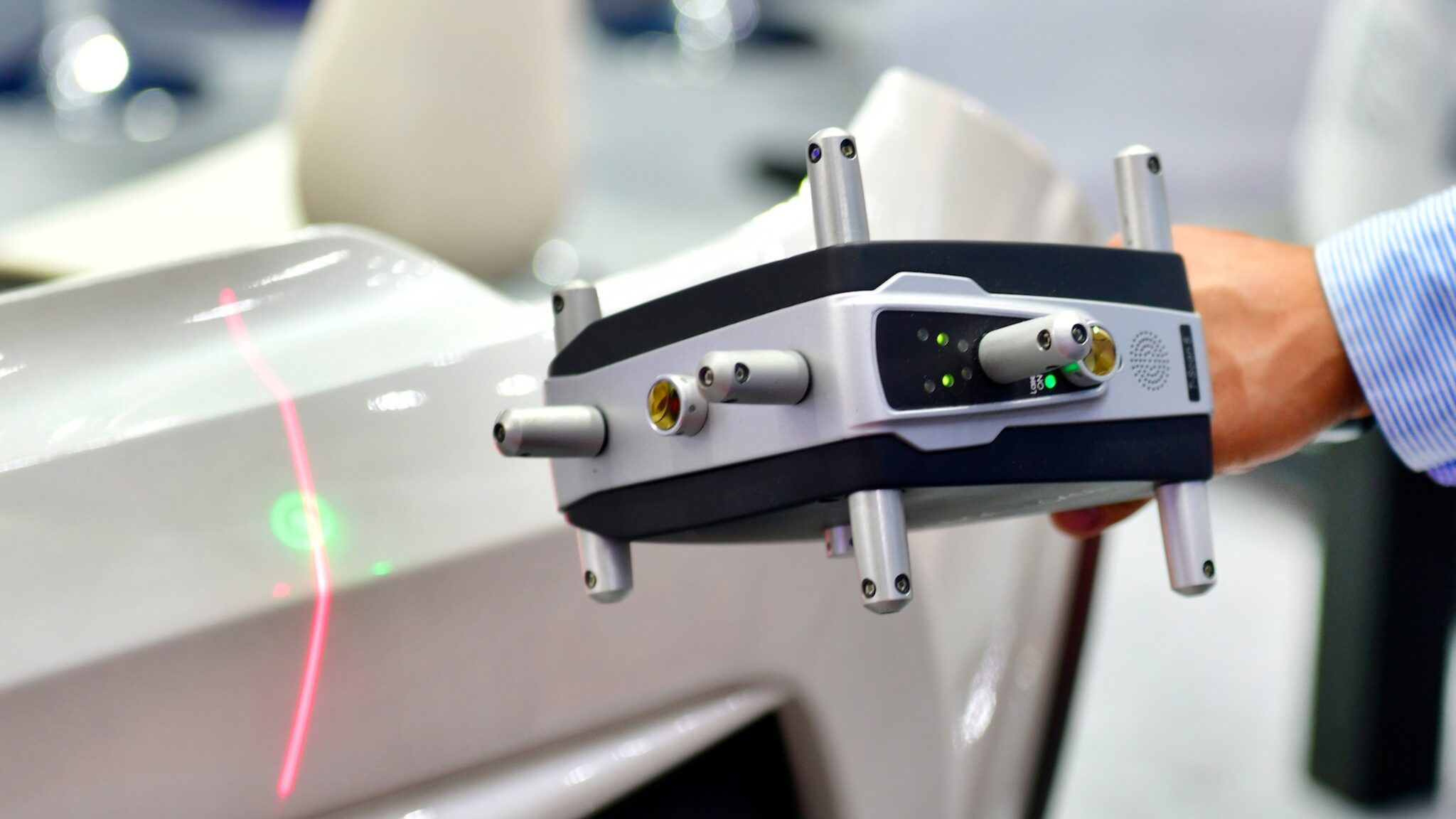
3D Scanning and Modeling for Hydropower Applications
The Power of Integration
The greatest value is realized when scanning and field machining are integrated into a single workflow.
Rather than treating dimensional measurement and machining as separate activities, following a closed-loop process leads to greater success during modernization projects:
Scan → Analyze → Engineer → Machine → Validate
This approach provides a level of certainty that was previously difficult to achieve.
Potential issues can be identified earlier. Engineering solutions can be developed around actual conditions rather than assumptions. Machining strategies can be optimized before mobilization. Final repairs can be verified before reassembly. The result is improved repair accuracy, reduced outage risk, and greater confidence throughout project execution.
Case Study: Turbine Runner Seal Ring Replacement and Machining
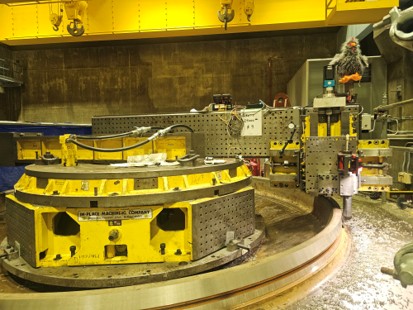
On-site Seal Ring Machining
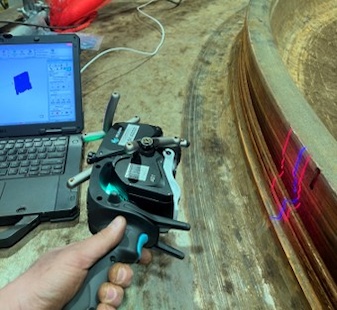
Precision Measurement With Laser
On-site Seal Ring Machining
Precision Measurement With Laser
On-site Seal Ring Machining
Precision Measurement With Laser
A pumped-storage generating unit experienced what initially appeared to be a routine runner seal failure. Plant personnel expected a relatively straightforward seal replacement during the planned outage. Once disassembly began, however, the situation changed dramatically. Inspection revealed that damage extended beyond the seal assembly and into the parent material of the runner itself.
What began as a maintenance activity suddenly became a significant engineering challenge. Removing the runner for offsite repair would have introduced extensive transportation logistics, additional engineering reviews, uncertain vendor schedules, and potentially significant outage extensions. Yet before any decision could be made, the project team needed to understand the true extent of the damage.
A comprehensive 3D scan was performed to capture the damaged geometry. The resulting digital model provided a level of visibility that traditional measurement methods could not achieve. Engineers were able to quantify material loss, evaluate remaining structural integrity, and determine whether a repair strategy could be developed around the actual condition of the runner. What emerged was an opportunity.
Rather than replacing major components, the team designed an oversized seal solution based on precise dimensional data obtained from the scan. Field machining systems were then deployed onsite to restore critical surfaces and machine the new geometry directly on the runner.
Following machining, additional verification ensured dimensional compliance before reassembly began.
The project ultimately avoided transportation delays, reduced outage risk, preserved the planned schedule, and returned the unit to service without the need for major component replacement.
Lessons Learned
The most important question was not whether the damaged component could be replaced. It was whether it could be saved.
Without accurate dimensional data, that determination would have been difficult to make. With scanning and field machining working together, the project team was able to make a confident engineering decision that preserved both schedule and asset value.
Case Study: Generator Rebuilds – Solving a Problem Traditional Measurements Could Not See
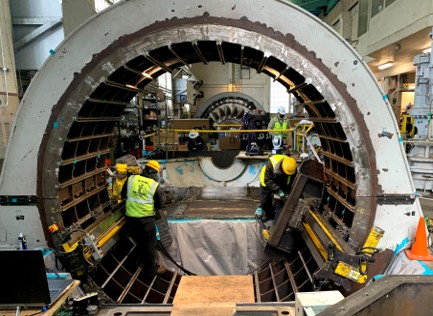
Horizontal Unit Stator Frame Keyway Machining
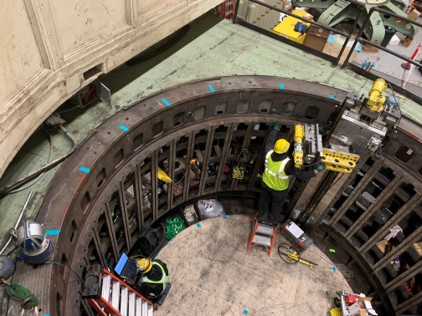
Vertical Unit Stator Frame Keyway Machining
Generator rehabilitation projects frequently involve the reuse of existing stator frames that have been in service for decades.
At one facility, concerns had developed regarding air-gap consistency during a major rebuild. Previous inspections had identified isolated dimensional variations, but no single measurement suggested a significant issue. Traditional measurement methods indicated localized concerns, yet the underlying cause remained unclear. The stator frame had experienced years of thermal cycling, electromagnetic loading, and operational stresses. Small geometric changes had accumulated gradually over time.
Before rebuild activities commenced, a comprehensive 3D scan was performed to establish a complete digital model of the structure. What the scan revealed changed the direction of the project.
Rather than isolated dimensional discrepancies, engineers discovered broader distortion patterns throughout the frame. The complete geometry told a story that individual measurements could not. Using the scan data, engineers developed a targeted machining strategy focused on correcting critical features while preserving overall structural integrity.
Field machining operations included keyway restoration, diameter correction, and large-diameter boring activities designed to restore geometric consistency. After machining, verification scans confirmed that critical dimensions met project requirements before stator stacking and reassembly began. The result was more than improved geometry. It was improved confidence. The project team entered reassembly with a complete understanding of the machine’s condition rather than relying on assumptions or isolated measurements.
Lessons Learned
Complex geometric problems rarely reveal themselves through individual measurements. Complete geometry often tells a very different story. By capturing the entire structure rather than selected dimensions, the team was able to identify the root cause of the issue and implement corrective actions with greater precision and confidence.
Reverse Engineering of Legacy Equipment for Future Generation
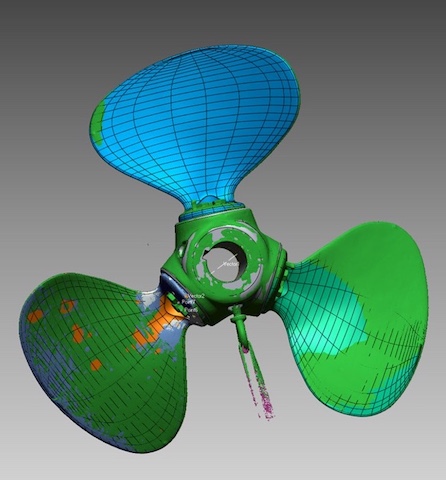
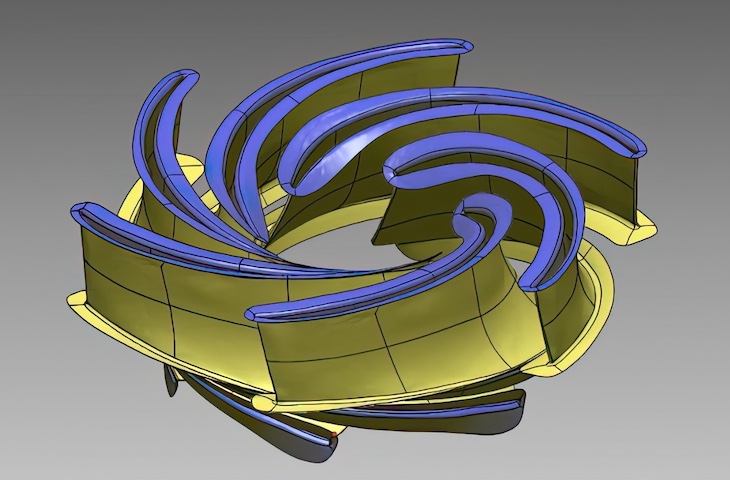
Many hydroelectric facilities continue operating equipment for which original drawings are incomplete, manufacturing tooling no longer exists, or OEM support has become limited.
For operators responsible for maintaining these assets, obtaining replacement components can be difficult, expensive, and time-consuming.
3D scanning and modeling provide a practical solution.
By capturing precise digital geometry directly from existing components, engineering teams can develop accurate models for replacement manufacturing, refurbishment planning, and future asset management.
In many cases, scanned data becomes more valuable than the original drawings because it reflects the equipment as it actually exists today.
Combined with engineering analysis and field machining expertise, reverse engineering provides operators with a powerful tool for extending the life of legacy assets while reducing dependence on increasingly scarce historical documentation.
Virtual Fit-Up and Outage Risk Reduction
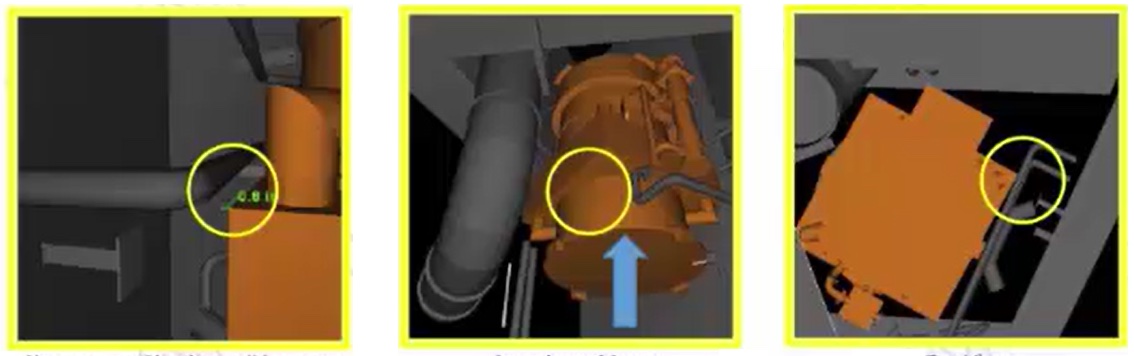
Virtual fit-up extends the value of 3D scanning beyond measurement and into project planning.
By combining scan data with CAD models of replacement components, engineering teams can evaluate installation conditions before physical work begins. This allows teams to assess clearances, review removal and installation paths, and better understand how new components will interact with existing equipment.
A recent 110-inch ball valve replacement project demonstrated the value of this approach. The valve had been in service for more than 60 years, and removal required navigating tight clearances within an aging facility. By capturing accurate field conditions and incorporating them into a virtual fit-up model, project teams were able to evaluate the replacement strategy using actual site geometry before outage execution.
As modernization projects become more complex, virtual fit-up is becoming an increasingly valuable tool for improving planning confidence, reducing uncertainty, and supporting more predictable outage execution.
Building Digital Assets for Future Outages
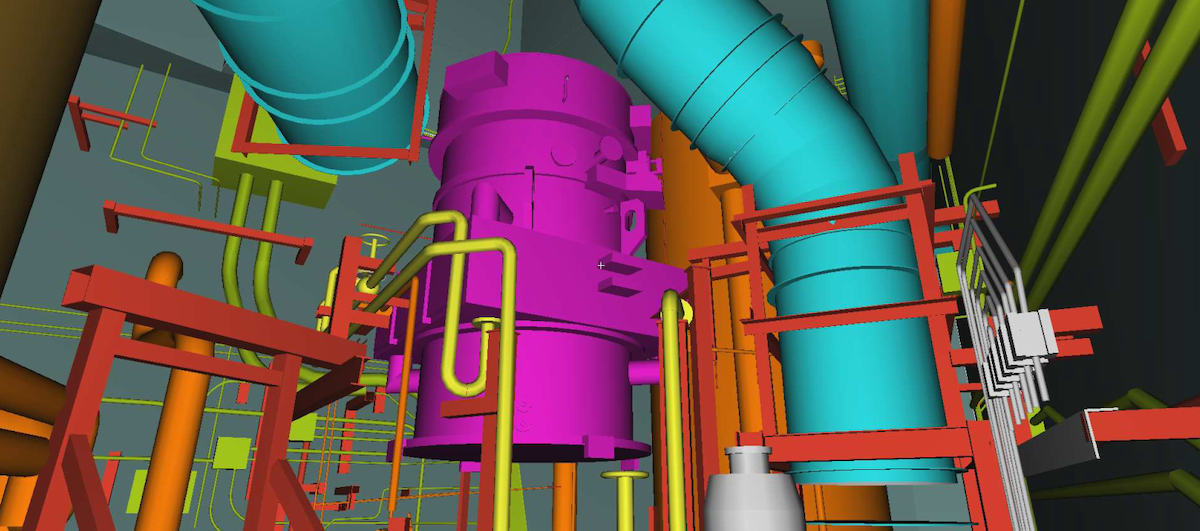
One of the most significant long-term advantages of integrated scanning and machining is the creation of persistent digital asset records.
Every scan creates a snapshot of equipment condition at a specific moment in time. Over multiple outages, those snapshots become a historical record of asset health.
Operators can track wear progression, monitor structural movement, evaluate repair effectiveness, improve lifecycle forecasting, and make more informed capital planning decisions.
What begins as a measurement activity ultimately becomes a strategic asset management tool.
As facilities continue to modernize aging infrastructure, these digital records will play an increasingly important role in guiding future maintenance and refurbishment decisions.
Four Lessons Hydro Operators Are Learning From Modernization Projects
Geometry Matters More Than Original Drawings
Original drawings describe how equipment was built. Scans reveal how equipment actually exists today.
Dimensional Intelligence Reduces Risk
Many of the most costly outage delays result from unexpected conditions discovered after work begins. The earlier those conditions are identified, the more options operators have.
Better Data Leads to Better Decisions
Engineering decisions are only as good as the information supporting them. Accurate geometry improves repair planning, fabrication, machining, and final assembly outcomes.
Digital Records Become Long-Term Assets
Each scan contributes to a growing body of knowledge that supports future outages, modernization projects, and lifecycle management strategies.
Exact Metrology provides 3D scanning, reverse engineering, dimensional inspection, and digital modeling services for hydroelectric facilities across North America.
Whether supporting outage planning, virtual fit-up studies, legacy part replacement, or digital asset creation, our team helps owners and operators gain a more complete understanding of their equipment before critical repair decisions are made.
To learn more about Exact Metrology’s 3D scanning and reverse engineering service, contact us today.